
Managing jewellery inventory requires careful attention. Every gold ring, silver chain, diamond necklace and gemstone item has its own value, weight, purity and design details. Even a small mistake in stock records can affect billing, stock checks or manufacturing.
Barcode and QR code tracking provide a more organised approach. They help staff identify items, check records and track movements without entering the same information repeatedly.
What Is Barcode and QR Code Tracking in Jewellery?
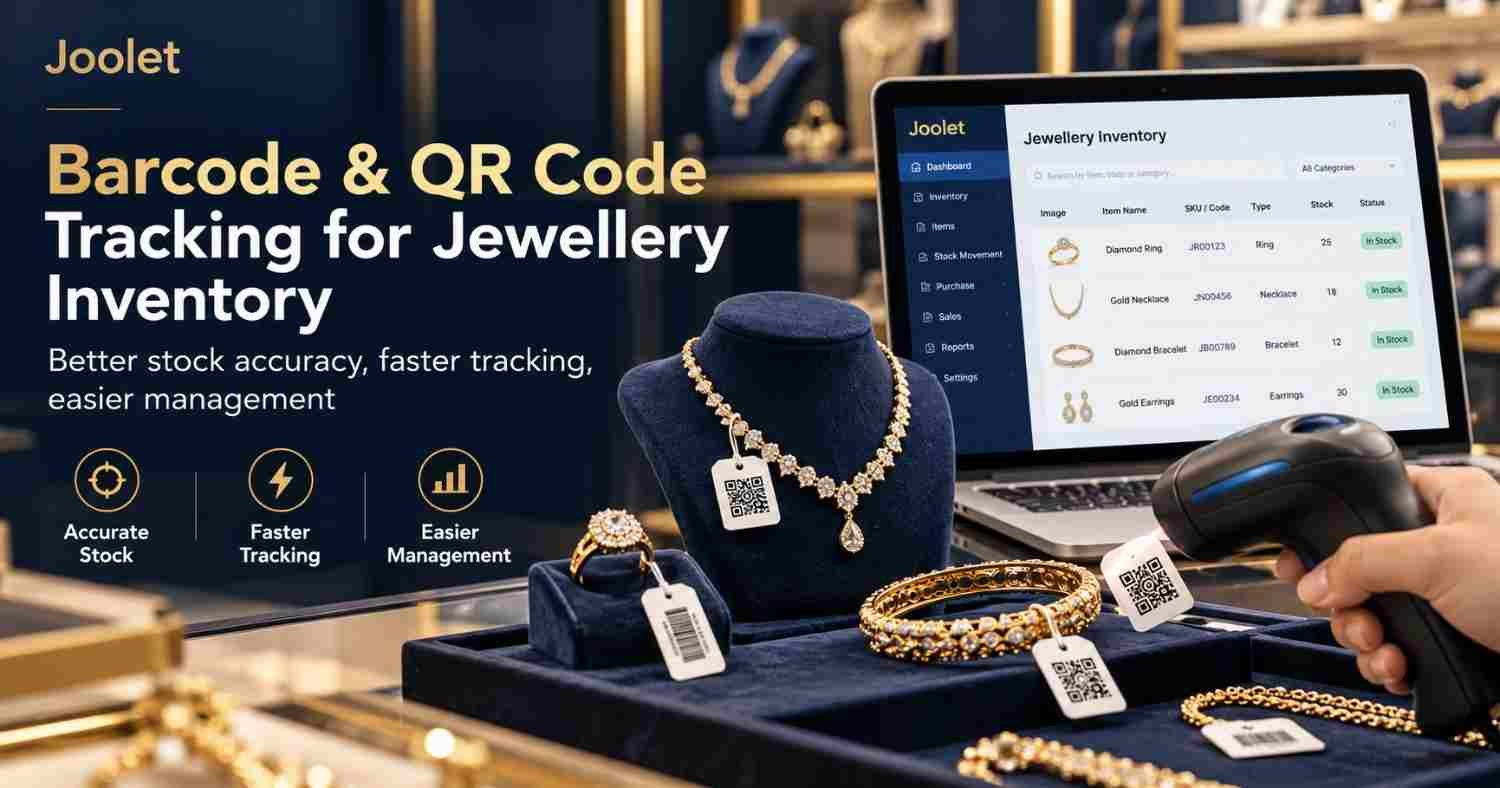
A barcode is a printed code linked to a product record in inventory software. When an employee scans it, the system finds the related item details, such as metal type, purity, weight, design number and stock status.
A QR code serves a similar purpose. It can store more data than a traditional one dimensional barcode or direct the software to a unique product record.
Important: A barcode identifies an item. It does not measure gold weight, verify purity or prove that a product is genuine. Those details still need proper testing, recording and stock checks.
Why Jewellery Inventory Needs Accurate Item Tracking
Jewellery inventory is different from ordinary retail stock. Two rings may look alike but have different weights, stones, making charges or purity levels. Counting only the number of pieces does not provide enough information.
Products may also move between showrooms, warehouses, manufacturing departments and karigars. Reliable records help staff understand where an item was last recorded and what happened to it.
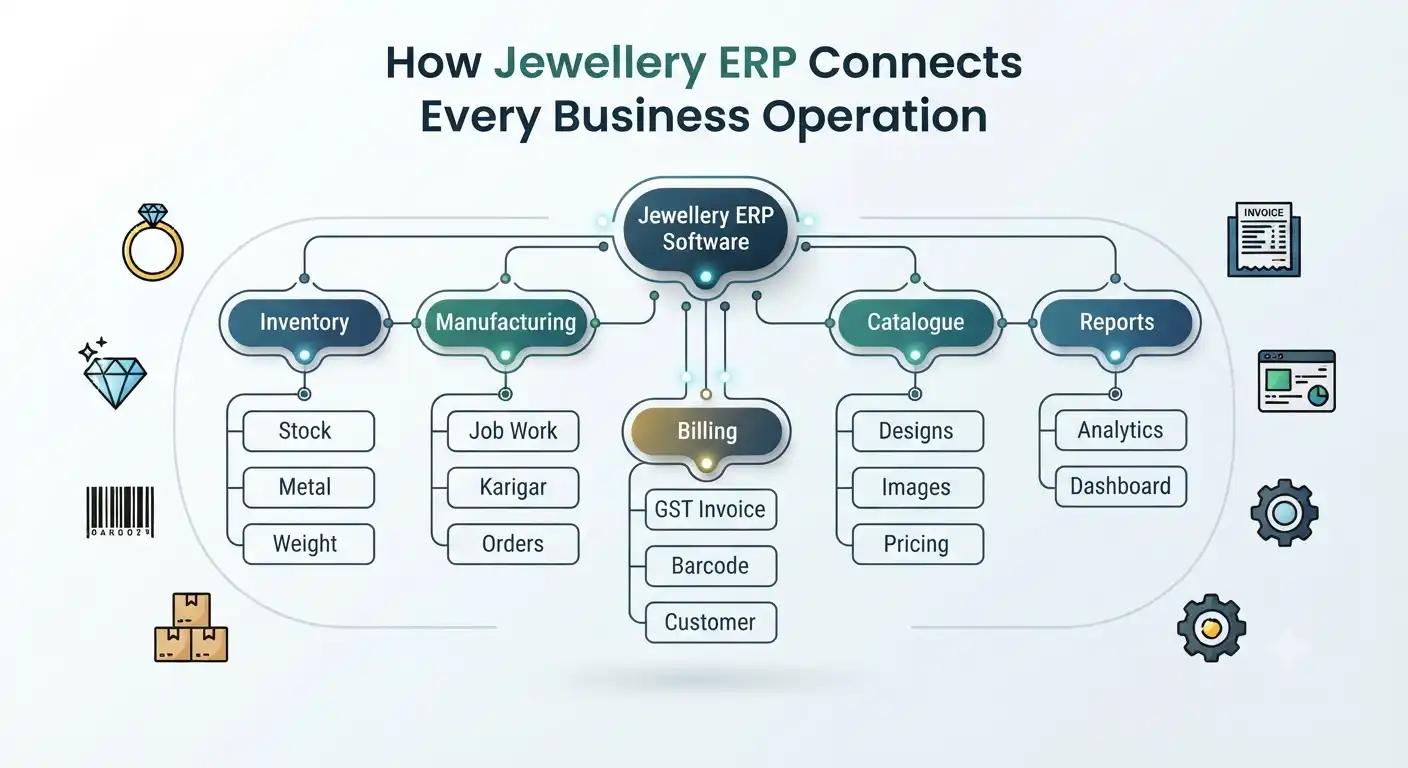
A suitable jewellery inventory management software system can connect product details with stock records. Scanning provides a practical way to find and update those records.
7 Benefits of Barcode and QR Code Tracking
1. Improves jewellery stock accuracy
Manual entry can cause mistakes. Scanning reduces repeated typing when identifying products.
During stock entry or verification, staff can scan each label and check the matching record. However, accurate results still depend on unique codes, correct item details and consistent use.
2. Makes physical stock verification easier
Checking physical stock against software records is important for any jewellery business. Searching a register for each piece can take time.
With barcode or QR code scanning, employees can identify a piece during stock counting and compare it with the expected inventory. Differences can then be investigated rather than overlooked.
Regular counts remain necessary, even when the business uses scanning technology.
3. Supports jewellery manufacturing and karigar tracking
Jewellery manufacturing involves several stages, such as casting, polishing, stone setting and finishing. Materials and batches often move between departments and outside karigars.
A batch code can be scanned when work is issued and again when completed work is received. This helps connect production movements to batch and karigar records.
Businesses using jewellery manufacturing inventory software can also link these records to labour entries, metal weights and production stages, depending on their setup.
4. Helps employees find product details faster
Scanning the product code can bring up its saved details.
5. Supports more reliable billing
Choosing the wrong item during billing can lead to incorrect descriptions or amounts. When scanning is connected to the billing system, staff can select the intended product record more easily.
But the final invoice still needs checks for current metal rates, making charges, discounts and applicable taxes. Scanning helps with identification, not every pricing decision.
6. Helps track transfers between locations
Jewellery may move between a warehouse and showroom or between branches. Codes can help staff record what was dispatched and what was received.
When supported by the software, location based inventory records make it easier to review stock at each branch.
7. Provides better records for stock planning
Reports are only useful when the underlying stock transactions are correct. Scanning connects transactions to specific items and helps keep records organised.
Managers can then review available stock, sales and transfers to understand which designs move regularly and which remain unsold.
Barcode vs QR Code: Which Should a Jeweller Use?
Both formats can work for jewellery inventory.
| Factor | Barcode | QR code |
|---|---|---|
| Common use | Product IDs and billing | Product IDs and links to detailed records |
| Data capacity | Usually lower | Usually higher |
| Scanning | Compatible barcode scanner | Compatible QR scanner or camera |
| Main consideration | Readable print on narrow tags | Readable code at a small size |
Before choosing, test printed labels on actual jewellery tags. Small, damaged or poorly printed codes may not scan reliably.
How to Introduce Scanning in a Jewellery Business
- Clean up inventory records. Check product IDs, weights, purity and locations.
- Assign unique codes. Avoid using one code for separate physical items when individual tracking is required.
- Choose compatible equipment. Confirm that the software supports the intended scanners and label printers.
- Test a small group. Try stock entry, counting, transfers and billing before expanding.
- Train employees. Set clear rules for scanning and replacing damaged labels.
- Continue physical checks. Compare actual stock with system records on a regular schedule.
How Joolet Helps with Jewellery Inventory Tracking
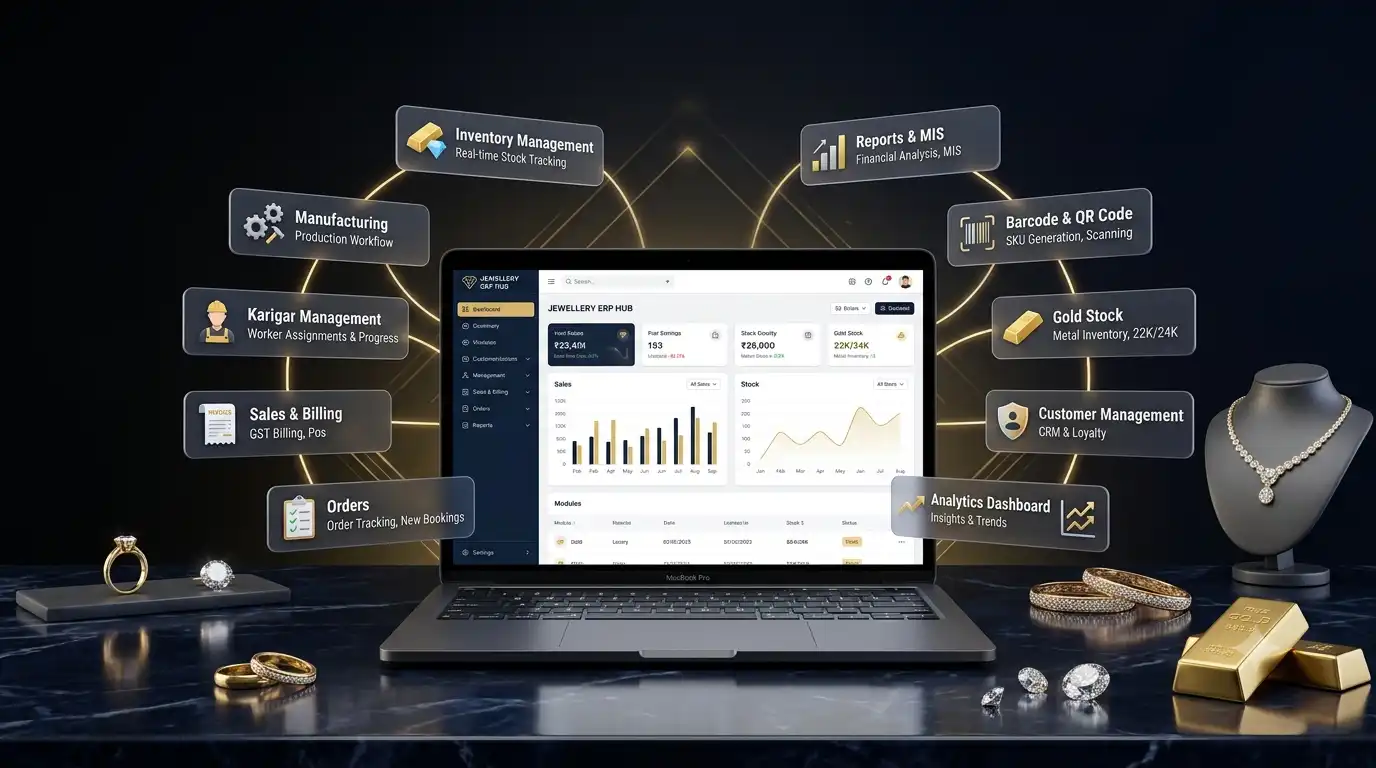
Joolet jewellery ERP software is designed for jewellery manufacturers, wholesalers and retailers. Its published features include unique barcode and QR codes for products, batch scanning, stock management and karigar records.
These features help connect item identification with daily inventory and production work. Businesses can review Joolet’s jewellery software services and confirm which scanning devices, tag formats and workflows suit their operations.
Frequently Asked Questions
What is barcode tracking in jewellery inventory?
It uses a scannable code to find an item’s inventory record. Staff can use that record during stock counts, transfers and other transactions.
Can QR codes reduce jewellery stock errors?
They can reduce manual identification errors when codes are unique and connected to accurate records. Physical stock checks are still important.
Is barcode tracking useful for small jewellery shops?
Yes. Small shops can use it to organise item records and make stock checks easier. The cost and setup should match the size of the business.
Can barcode scanning track jewellery manufacturing?
Yes. Compatible manufacturing software can use scanned codes to record batch issues, receipts and movements between production stages.
Conclusion
Barcode and QR code tracking make jewellery items easier to identify and their movements easier to record. They support stock verification, billing, manufacturing and branch transfers.
The main requirement is reliable inventory information. Good software, readable labels, trained employees and regular physical checks work together to make tracking useful.